
Styling stations and chairs
Chair bases, arms, foot rests, and the station surfaces where product and hair collect through the day.
Serving Fort Wayne, Indiana & surrounding areas
Mon–Fri 8am–6pm Sat 9am–2pm
Where clients sit for an hour
Salon clients spend a long appointment looking at one small area of your business from a few feet away, which is a harder test than any lobby faces. We clean Fort Wayne salons, spas, and barbershops around appointment books rather than across them.
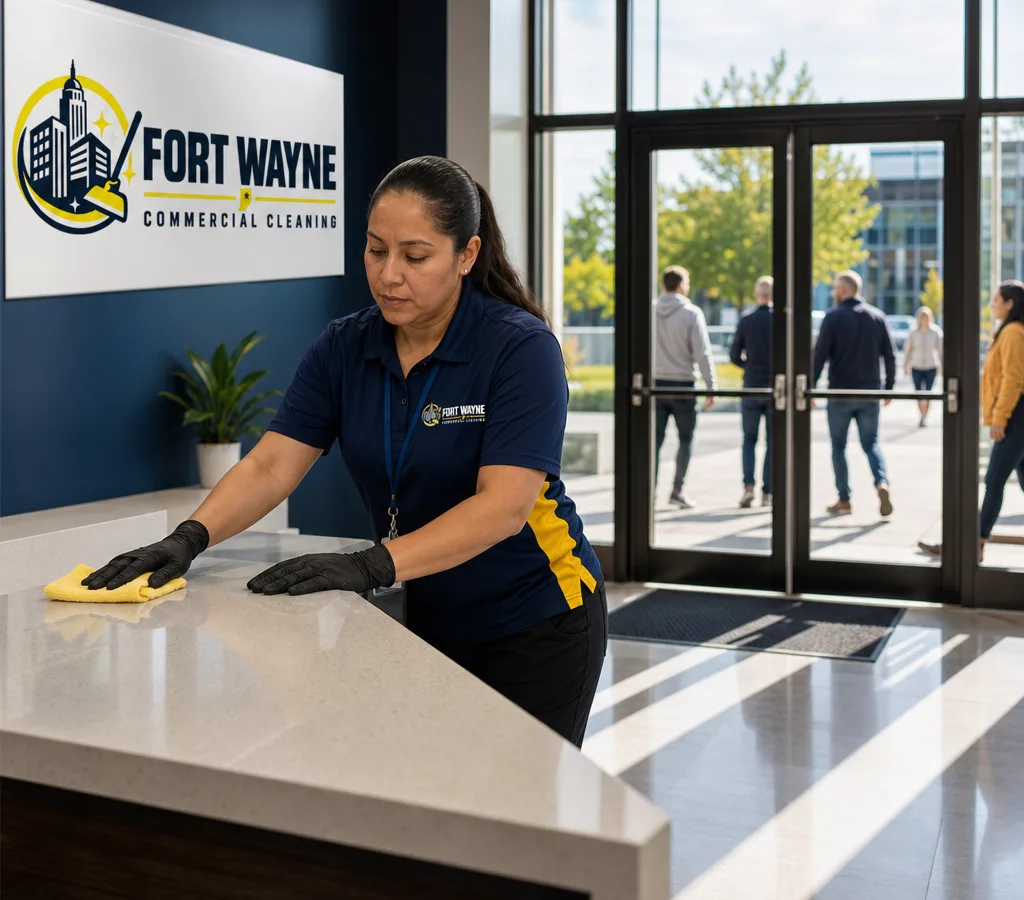
Product residue is the real problem
A styling floor collects cut hair, colour splatter, and an aerosol film from sprays and powders that settles on every nearby surface. Back-bar sinks and bowls hold product residue, and treatment rooms add oils and wax. None of that responds to the routine a general office gets.
So the scope here is weighted toward the stations, the bowls, and the mirrors rather than spread evenly across the floor plan. Products are also chosen with your team, because some surfaces and finishes in a salon do not tolerate general-purpose cleaners.
We also understand the local realities that change how cleaning holds up week to week. Winter brings salt and slush tracked into entryways and carpeted lobbies. Spring and summer bring more dust, pollen, and frequent door traffic. Those conditions drive the details: extra mat vacuuming, hard floor care that prevents white salt film, and a clear plan for restocking and sanitizing high touch points.
You can start with a simple, reliable schedule and expand as you grow. We will help you decide what fits your building and your budget.
Salon cleaning scope
The scope, schedule, and priority areas are defined before recurring service begins.
Chair bases, arms, foot rests, and the station surfaces where product and hair collect through the day.
Full-height mirrors are the surface a client studies for an hour, so streaks and spray film show more here than anywhere.
Bowls, taps, hose fittings, and the surrounds, where colour and product residue stain if left between visits.
Beds, trolleys, and hard surfaces in rooms where oils and wax make the mess different from the salon floor.
Cut hair travels well beyond the chair, so edges, baseboards, and the gaps between units are named in the scope.
Held to the frequency a client-facing business needs, including the retail shelving at reception.
Fitting the appointment book
A salon rarely has a quiet hour, so timing is agreed before scope and usually sits outside opening entirely.
What we build into the scope:
We schedule around patient flow, and we keep the routine consistent so the office looks and feels the same day after day. If your practice has specific product requirements or checklists, we can align the plan to your standards during the walkthrough.
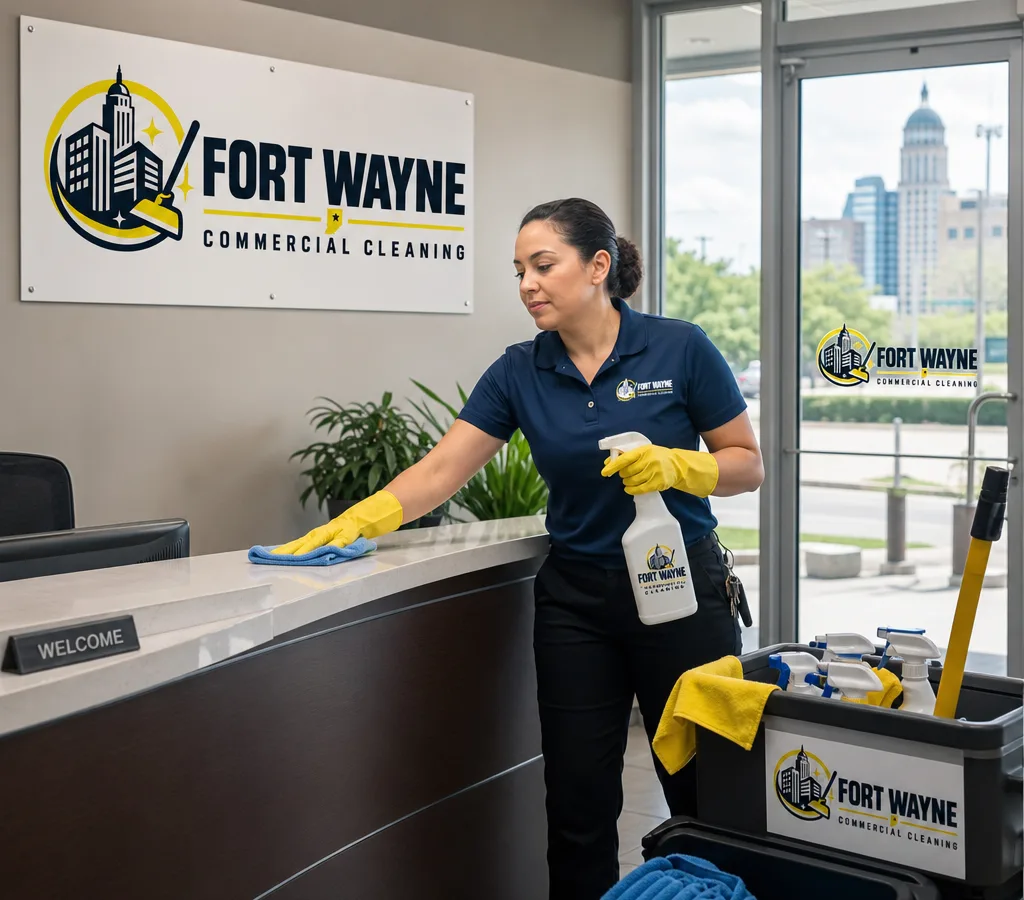
Setting up
A straightforward setup makes the scope easier to follow and recurring service easier to manage.
Seeing the floor mid-appointment shows where hair and product actually travel, which is further than most owners expect.
Station finishes, mirrors, and treatment surfaces each have limits, and those are settled before a routine is written.
Stations, wet areas, treatment rooms, and reception get their own cadence in one written scope.
Salons change with the season and with the stylist roster, so the plan is revisited rather than fixed.
Pricing factors
Station count matters more than square footage here, because each station is its own cluster of surfaces. Bowl count, treatment room count, visit frequency, and floor type then adjust the figure. A three-chair barbershop and a full spa are different jobs entirely.
Quotes follow a visit during opening hours, and periodic floor work is priced on its own cycle so the recurring rate stays honest.
Salon questions
It is the defining task here. Hair travels well past the chair, so edges, baseboards, and the gaps between units are in the scope rather than treated as a sweep-up.
Products are settled with your team before any routine starts. Some salon finishes, mirrors, and treatment surfaces react badly to general-purpose cleaners, and that damage is slow enough to get blamed on wear.
Yes. Bowls, taps, and fittings are part of the routine, with periodic descaling where your water needs it. Product residue stains if it is left between visits.
Usually not. Nearly all salon work happens after close or before opening, which keeps us clear of appointments and lets us work properly around the stations.
Included. Product shelves collect dust and handling marks, and they are the last thing a client passes on the way out.
Tell us your station and bowl count and your quietest window, and we will visit during opening hours before quoting.
Request a quote
Send the building type, approximate size, and how often you need service. We reply to arrange a walkthrough.