
Strip and wax on VCT
Old finish removed back to the tile, then fresh coats built up and cured. This is the reset for a floor that no longer responds to buffing.
Serving Fort Wayne, Indiana & surrounding areas
Mon–Fri 8am–6pm Sat 9am–2pm
Machine work, not mopping
Floors are the largest surface in most buildings and the first thing to look tired, because routine mopping maintains a finish but cannot restore one. Floor care is the periodic machine work that brings a surface back, scheduled so it never becomes an emergency.
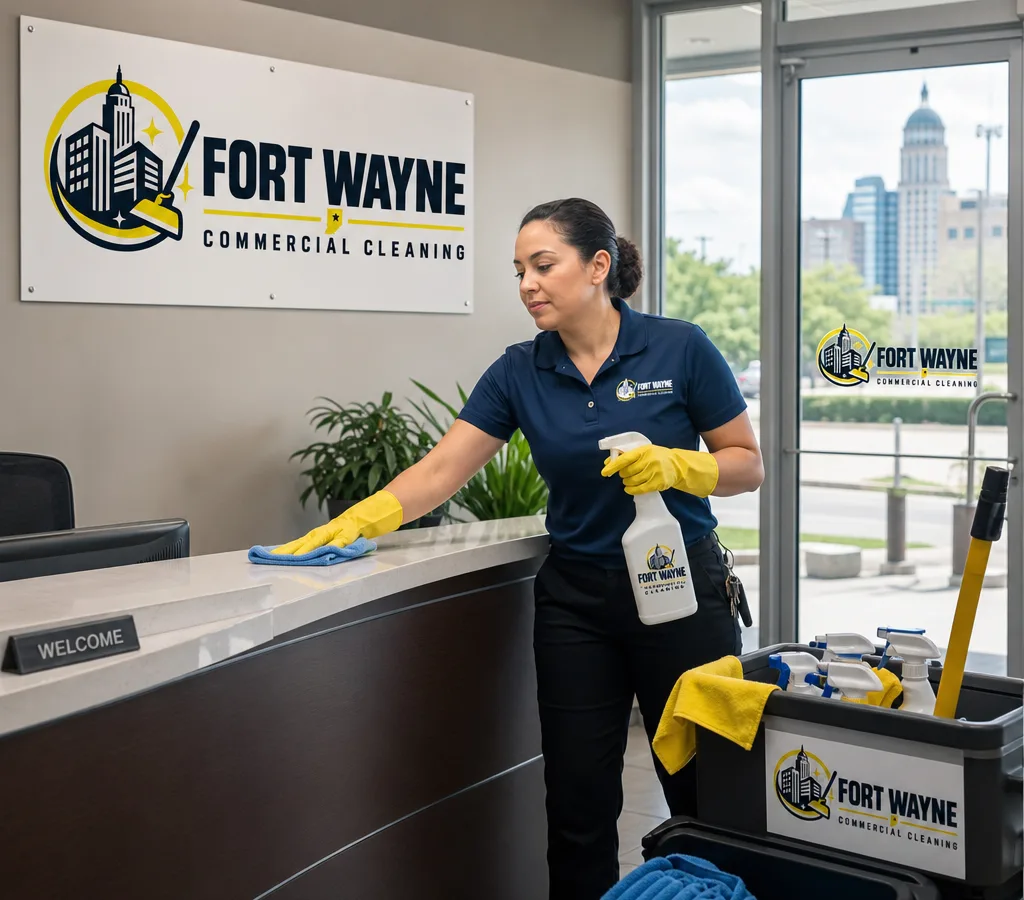
Maintenance against restoration
A nightly route keeps dirt off a floor. It does not rebuild a worn finish, lift embedded soil from carpet pile, or bring back the reflection on polished concrete. Those need machines, chemistry matched to the surface, and time with the area out of use.
Treating the two as one line item is why floors decline on contracts that otherwise run well. We price periodic work as its own cycle with named dates, so it actually happens rather than being deferred to protect a monthly figure.
We also understand the local realities that change how cleaning holds up week to week. Winter brings salt and slush tracked into entryways and carpeted lobbies. Spring and summer bring more dust, pollen, and frequent door traffic. Those conditions drive the details: extra mat vacuuming, hard floor care that prevents white salt film, and a clear plan for restocking and sanitizing high touch points.
You can start with a simple, reliable schedule and expand as you grow. We will help you decide what fits your building and your budget.
By surface and method
The scope, schedule, and priority areas are defined before recurring service begins.
Old finish removed back to the tile, then fresh coats built up and cured. This is the reset for a floor that no longer responds to buffing.
High-speed work that restores gloss between strip cycles, which is what keeps the strip interval long and the cost down.
Mechanical polishing and densifiers on sealed concrete, common in showrooms, warehouses, and newer retail space.
Pre-treatment, agitation, and extraction that lifts soil out of the pile rather than redistributing it, with drying time planned in.
Grout lines hold soil long after the tile looks clean. Machine scrubbing and sealing is what makes the difference visible.
The few feet where weather arrives. Getting matting right protects every finished floor behind it, which is cheaper than refinishing.
Planning the cycle
Machine work needs the area out of use, so timing is agreed before the method is chosen.
What we build into the scope:
We schedule around patient flow, and we keep the routine consistent so the office looks and feels the same day after day. If your practice has specific product requirements or checklists, we can align the plan to your standards during the walkthrough.
Before the machines arrive
A straightforward setup makes the scope easier to follow and recurring service easier to manage.
VCT, sealed concrete, LVT, and terrazzo all look similar under wear and take entirely different chemistry.
A test patch shows what the floor will actually respond to before committing the whole space to a method.
Which zones, in what order, and when they are back in service, in writing.
The work is only worth it if the routine that follows protects it, so the next cycle is scheduled at handover.
Pricing floor work
Floor work is priced by area, surface type, and condition, and condition moves it most: a floor stripped on schedule costs far less per square foot than one left until the finish has failed. Access and furniture moving also factor in.
We quote after seeing the floor and testing a patch. Anyone pricing a strip and wax without identifying the surface is guessing, and the risk of that guess lands on your floor.
Floor care questions
A strip and wax needs the area clear overnight and the finish wants curing time before heavy traffic. Carpet extraction is usually dry within hours. We give you the window before booking, not after.
Typically once or twice a year, but it depends on traffic and on how well the floor is maintained between cycles. Regular burnishing can stretch the interval considerably.
We work in zones and move light items. Heavy fixtures and anything fragile should be cleared by your team or quoted separately, and that is agreed up front.
It depends on what is already there. Mechanical polishing restores a great deal, but a floor with deep staining or damage has a ceiling, and we will say so after the test patch rather than after invoicing.
Yes, and the two work together. Nightly routes maintain a finish; periodic machine work restores it. Without the second, floors decline no matter how good the first is.
Give us your floor types and rough square footage, and the next step is a look at the surface, a test patch, and a quoted cycle.
Request a quote
Send the building type, approximate size, and how often you need service. We reply to arrange a walkthrough.